A picture book editor’s guide to rhyme and metre

Stand out from the 'slush pile' by making your rhyming children's book the best it can be. Master watertight metre (‘meter’ in American English) and consistent rhyme schemes. Or break free from the limitations of rhyme and explore other ways to make your book a joy to read aloud.
First for the bleak stuff!
More than 90% of the stories aspiring children’s book authors send me for picture book manuscript assessments are in rhyme. Almost all of them have metre problems the author can’t hear themselves. Sometimes the errors are just here and there. But, in most rhyming by new authors, metre errors are extensive and the whole manuscript needs to be reworked. That can feel really deflating.
Trade publishers also receive a huge number of poor quality rhyming submissions. All of them get rejected.
When you’re self-publishing, you don’t have to answer to an editor or a publisher. So, sadly, poor quality rhyming books are becoming more and more common as people publish low-quality books to platforms like Amazon KDP. Interestingly, thus far, not even AI seems to get rhyme quite right! It goes to show that rhyme and metre are hard to master, even for robots.
But a human-made rhyming story, written by someone who has taken time to hone their craft, can be remarkable. Exceptional, unforgettable rhyme really is a superpower. It just takes a bit of time and attention to master.
Picture book authors who understand the basics of rhyme and metre can spot errors more easily, and ultimately deliver better books to readers.
Read on to learn more, or follow the jump-links to skip to sections of interest.
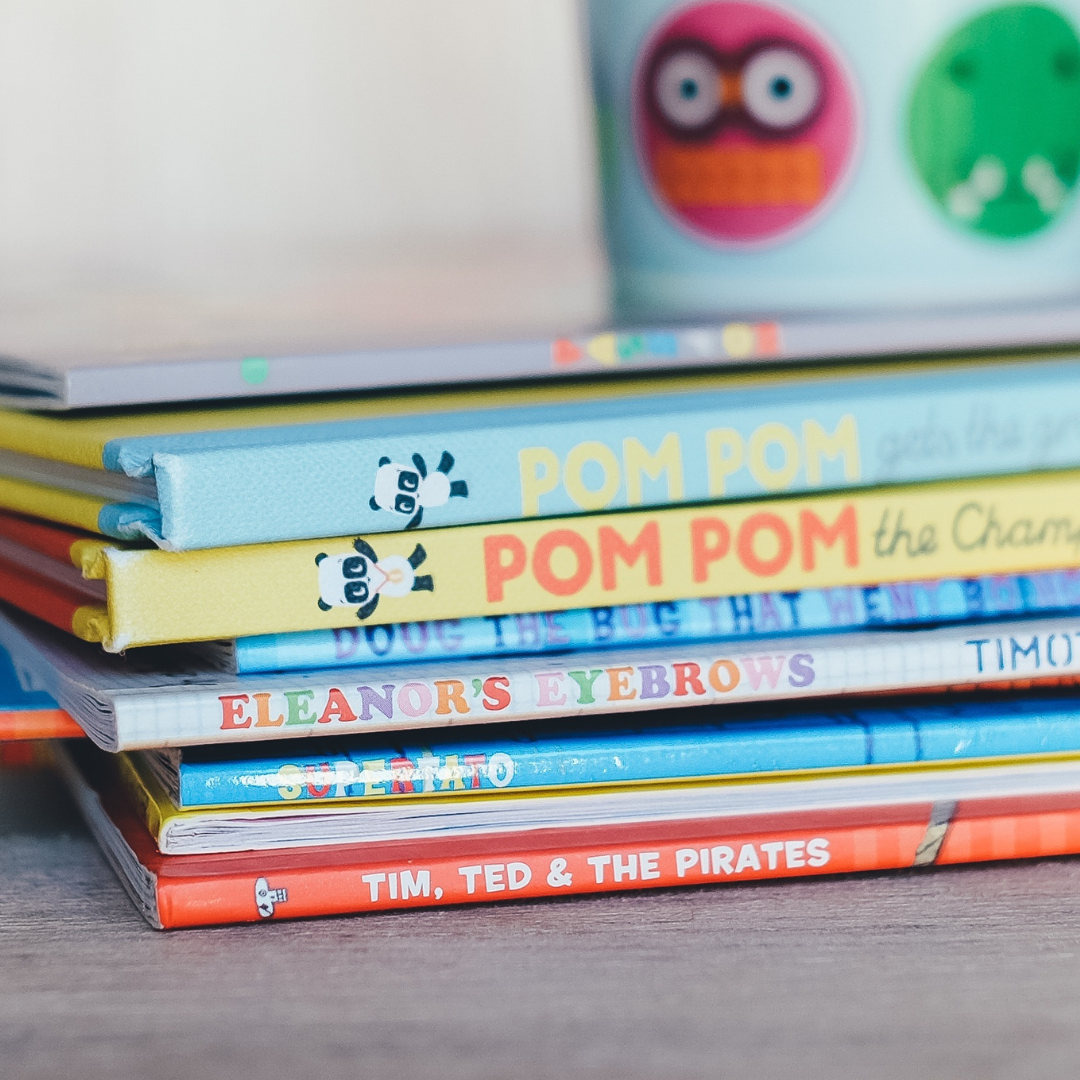

Industry insights: Why many trade publishers don't consider rhyming picture books
Some trade publishers accept submissions of rhyming picture book texts. But many don’t. Here’s why:
Trade publishers are sent an overwhelming number of rhyming manuscripts, mainly from inexperienced authors. Many are riddled with errors.
Trade publishers usually don't have the time or resources for extensive editing. They’re looking for highly polished texts.
Rhyming books are harder to translate, which limits a significant income stream for publishers.
If not written cleverly, rhyming manuscripts can feel old-fashioned. Trade publishers are highly motivated by commercial appeal.

Common errors in rhyming children's books
Most authors think writing in rhyme is easy, and they can’t see the errors in their own work. Even those lucky enough to have a natural ear for rhyme tend to write manuscripts that go off the rails here and there.
Even after reading this blog, you’re probably going to make errors. It takes time to get your head around it.
You really need to focus on the mechanics and be prepared to add, delete and rearrange words extensively to make a rhyming story really ‘sing’.
The most common errors I see in rhyming stories that aspiring authors send me for picture book manuscript assessments are:
inconsistent metre
inconsistent rhyme scheme
forced, convenient, imperfect or repetitive rhyming words
poor story quality due to the focus on rhyme.
Reasons not to write children's books in rhyme
I strongly encourage aspiring authors to try rewriting their stories in non-rhyming styles as a discovery exercise. Or at least to make their next story a non-rhyming story. Here are some reasons why writing a non-rhyming picture book could set you up for greater success:
Non-rhyming picture books can feel more unique and contemporary, which may help you stand out from the 'slush pile' when you submit to trade publishers or self-publish.
Writing in a non-rhyming style frees you from following the strict rules of rhyme and metre, which may allow you to express your story more effectively.
Writers who explore other poetic devices like assonance and alliteration can develop a more expansive ‘toolbox’ of skills, and ultimately deliver more varied stories, which are still a joy to read aloud.
Establishing a consistent rhyme scheme
Once you choose a rhyme scheme, this structure it should be applied consistently throughout your manuscript. This helps your story feel easy, satisfying and smooth to read.
Below are are three common examples of rhyming structure. You don’t have to stick to these, there are many more options.
Rhyming couplets
Lines are arranged in groups of two. Lines one and two rhyme. Lines three and four rhyme. Lines five and six rhyme, and so on.ABCB rhyme scheme
Lines are arranged in groups of four. The first and third lines of each stanza do not rhyme. The second and fourth lines rhyme. This scheme is used in I’m a Little Teapot and Jack and Jill.AABBA rhyme scheme
Lines are arranged in groups of five. The first, second and fifth line of each stanza rhymes. The third and fourth lines rhyme. This is the rhyme scheme used in limericks.
Occasionally a writer might temporarily break out of their rhyme scheme during a story. This should be highly intentional and serve a distinct purpose. In this case, it’s your job to clearly establish a rhyme scheme, break it intentionally and purposefully, and then return people to the recognisable rhythm.

Establishing a consistent metre
Firstly, what is metre?
Metre is a consistent pattern of stressed and unstressed syllables used in rhyming stories. You might call it the 'beat'. Phrases must be crafted so that the stressed syllables fall where they do in natural speech, and not in insignificant or in-between words.
Unless you're writing in free verse - a no-rules style that is uncommon in picture books - a consistent metre is very important. Alongside a consistent rhyme scheme, a consistent metre also makes your story easy, smooth and satisfying to read.
You might choose a metre intentionally before you start to write, because it suits the ‘feel’ of your story. Or a phrase or two might just ‘pop’ into your head that inspire a new story. Then you have to identify the metre of these phrases and apply it consistently as you write the rest of the manuscript.
Whatever metre you choose, your job is to ensure that it remains consistent.
Common types of metre used in picture books
There are many types of metre. But most aspiring authors who send me picture book manuscripts for feedback are using subtypes of triple or duple metre. Read on for example of these different styles.
Triple metre is a repeating three-beat pattern, including one stressed syllable and two unstressed syllables. The stress can fall on the first, second or third beat of each three-beat group, but this must be consistent throughout the story. The following extract from Clement Clarke Moore’s poem A Visit from St. Nicholas is an example of triple metre where one stressed syllable is followed by two unstressed syllables. There are four stressed syllables per line. I’ve bolded and underlined the stressed syllables.
‘Twas the / night be-fore / Christ-mas when / all through the / house
not a / crea-ture was / stirr-ing not / even a / mouse
Notice that the stresses fall as they do in natural speech (Christ-mas not Christ-mas) and not in the insignificant or in-between words.
Notice also the ‘extra’ syllables at the beginning of the lines. You can get away with one or two of these, so long as they are insignificant words. The first stress of each line must fall where it would in natural speech to maintain the beat of the entire line. So don’t give your reader any red herrings.
For example, adding one extra rogue word might make your reader slip up:
I / love nights be / fore Christ-mas / when all through / the house…
See how all the wrong words get stressed? Read it out loud in an exaggerated way. It sounds very odd.

Duple metre is repeating two-beat pattern where stressed and unstressed syllables alternate. The stress can fall on the first or second syllable. Below is an extract from a lullaby based on an early 19th century English poem by Jane Taylor… better known as Twinkle, Twinkle, Little Star. In this example of duple metre, the stress falls on the first syllable of each two-syllable pair.
Twin-kle / twin-kle / lit-tle / star
How I / won-der / what you / are
Did you notice that there is an unstressed syllable ‘missing’ at the end of both the lines? This is a spot to take a pause. It often ‘feels’ stronger to end each line on a stressed syllable, and your reader should be able to follow this.
The above example of duple metre also shows how the stresses must fall the way they do in natural speech, with no extra words thrown in to derail the metre. Here’s what might happen if something went wrong:
Twin-kle / twin-kle / bright lit / tle star…
Note how every syllable matters.

Other types of metre
There are many variations of triple and duple metre, and many other types of metre besides.
Most people don’t have detailed knowledge of these subtypes and go by ‘feel’. Metre might feel simple, hectic or sing-songy. Choosing a metre is completely up to you as a creator.
The most important thing is that you implement your chosen metre consistently throughout your story.
If you’re struggling to identify your metre, or needing support with a more complicated metre, please feel free to reach out to me for editorial support.
But for now, let’s recap.
Golden rules of rhyme and metre in picture books
Choose a rhyme scheme and use it consistently. If you break out of your rhyme scheme temporarily it must be very intentional and serve a story purpose.
Use your metre (repeating pattern of stressed and unstressed syllables) consistently. Every syllable matters. Make it watertight.
Craft your phrasing so that stresses always fall where they do in natural speech (Christmas not Christmas). And on significant words, not in-between ones (go away not go away).
Highlight stressed and unstressed syllables on your manuscript to more easily identify errors. Be mathematical about it.
Read your story aloud, exaggerating the stressed syllables. Don’t rush over words to compensate for bits that don’t quite work.
Ask someone to read your story aloud to you. It’s best if they have never read the story before. See where they trip up.
Rewrite your story without rhyme. You can still use poetic devices like assonance and alliteration to make your story a joy to read aloud. Ask yourself: Does your story definitely need to be in rhyme? What purpose is it serving?
Seek out professional editorial support to make sure your rhyming story is watertight before you submit stories to publishers, or self-publish. You could with my Quick Picture Book Manuscript Review.
Test yourself with real-life metre examples
Have a look at these three examples of metre fixes. x
These are adapted from real manuscript assessments, with details changed to protect the authors’ privacy.
Can you spot the errors, and see why the editorial changes have been made?
Example one (duple metre)
Before
Paulie bear felt quite glum.
Rumbling noises were in his tum.
After
Paulie bear was feeling glum.
Rumbling sounds were in his tum.
Editor’s notes: The aim is a smooth, regular duple beat. In the original, the first line is too short to establish the rhythm, while the second is too long. As a result, the stresses seem fall in awkward places, like this: Rumbling noises were in his tum. The revision creates a more even rhythm without changing the meaning.
Example two (triple metre)
Before
Out of the dark cave flew a shimmering bat.
It was screeching and swooping and then it knocked off my hat.
After
Out of the dark flew a shimmering bat.
It screeched and it swooped and it knocked off my hat.
Editor’s note: When the reader glances at this triple metre text, they’ll be tempted to let the first stress all on the word out, as that’s how we naturally speak. But then the line plays out like this: Out of the dark cave flew a shimmering bat. I’ve removed a few syllables to tighten this up.
Example 3 (triple metre)
Before
The ducklings waddled around, looking so fluffy and sweet.
They got inside my slippers and went to sleep on my feet.
After
The ducklings went waddling, all fluffy and sweet.
They climbed in my slippers and snoozed on my feet.
Editor’s note: One of the most common problems I see is writers falling in love with their description. Extra words can weaken your rhythm. Metre rquires you to be quite restrained, but following the rules doesn’t mean you have to lose your whimsy. It’s very satisfying when you can find phrasing that both serves your story and keeps the metre on track.
How did you go?
As a picture book editor, these examples are exactly the kinds of rhythm issues I help writers identify before they submit to publishers.
If some of the differences felt obvious, that's a great sign. You've already started to develop your ear for metre.
If it still feels hard to identify the errors, don't worry. That's exactly where most writers begin.
The biggest challenge often isn't hearing metre problems in someone else's writing. It's hearing them in your own manuscript.
That's exactly why I offer manuscript assessments. I'll help you identify the metre issues that are hardest to hear in your own work, while also looking at the story, structure and overall reading experience.
Please reach out if I can be of help with your next story.
Until then, happy writing and happy rhyming!

Professional developmental feedback and high-level editing for authors working on chapter book and junior fiction manuscripts.